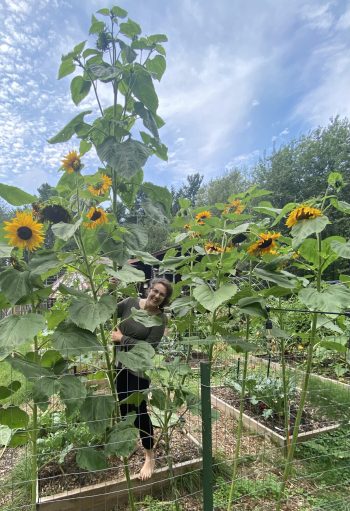
Hi, I’m Amanda. This is Ollie. We live in a beautiful community on the shores of Lake Michigan. I work part time as a registered nurse for the public health department and also teach classes in a wide variety of subjects relating to homesteading and prepping with a sustainability focus.

Mead Public Library STEMist in Resident 2026
Project Needs
Landscape & Installation
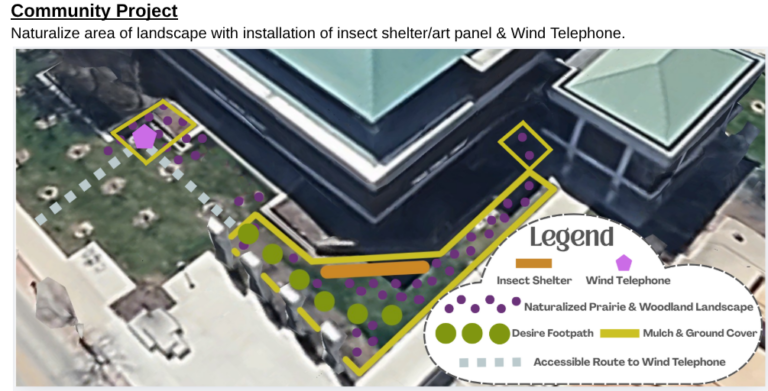
The area of the landscape wrapping from the public access of the library to the eastern lawn sees heavy foot traffic via desire paths leaving large areas of the lawn barren and is an ideal site for restoration and naturalization efforts. These efforts will provide for a lower maintenance landscape, boost water retention in the soil and provide erosion protection. Educational placards flanking the foot path will provide education to guests on the native landscape features and stewardship practices. Crafting berms of drought tolerant, rugged prairie grasses and perennial flowers of varying height, color and texture, foot traffic will be guided to the cement path on the north face of the library until reaching a shortened foot path to the courtyard beyond. Grasses and flowers will include a mix of blooming times and winter interest ensuring an appealing walk year round. Ongoing spring and fall maintenance could include cutting back of dead plant material, splitting & replanting of perennials, and selective pruning.
Insect Shelter & Art Panel
Street Facing: Wood panel installation (4X4 post, plywood) featuring a mixture of curated, donated, found and purchased nest materials for insects. Examples include: bamboo cane, hollow reed, drilled hardwood logs, deadwood, tree bark, dry leaves, straw, hay, rolled-up corrugated cardboard, pine cones, twigs, terracotta pot pieces, brick.
Library Facing: Mural featuring natural & outdoor imagery reflecting the Sheboygan community and spirit of the space.
Community Input
Community feedback will be sought on the design and plant selection of the landscape, insect shelter design, and art panel design. This input will be collected via Google Forms, in person brainstorming sessions and various other means. The community, both individuals and organizations, will be called on to support this project through the donation of time, labor, materials, and stewardship of the space.
Wind Phone Installation
Lead by and in partnership with Sharon S. Richardson Community Hospice, and Habitat for Human
Summary
A Wind Phone is a permanent, publicly accessible, installation where individuals can
engage with their grief in a meaningful and symbolic way, strengthening feelings of
continued connection. Together, these elements create a unique space that supports
grief-awareness, public education, environmental stewardship, and community.
Wind Phone Concept Background
Originating in Japan, wind phones have been adopted globally as gentle, accessible grief-support tools. They provide a disconnected telephone in an intentional space allowing individuals to “speak” to those they’ve lost. Wind Phones acknowledge and address the universal experience of grief and encourage communities to engage with grief and maintain connections to lost loved ones. This unique experience often supports emotional well-being.
Get Involved
Donations of time, labor, materials, and enthusiasm across time directly shape the success of this project; allowing us to expand the scope of restoration, reduce costs, and build a sense of shared ownership in the space. Volunteer effort accelerates planting and maintenance, material contributions make higher-quality and more diverse habitat possible, and community enthusiasm helps sustain long-term care, ensuring the landscape continues to thrive well beyond its initial installation. We’re inviting community members and local businesses to help reimagine our public library grounds as a thriving, naturalized landscape. By getting involved, you’ll help build a more resilient environment while fostering greater awareness and connection to the natural world.